Zoos, as an industry for several decades, have consistently registered profit losses as a result of hemorrhaging public images while modern perspectives have reinterpreted their institutional and physical structures as often archaic and a form of outright animal abuse. Although establishments such as Marineland have begun to fail without recovery, other corporations have attempted to bridge the gap between modern conservational focuses and their corporate interest. Published by Gary Thrill in the Energy and Environment Journal for Oregon Business, many details of the process of this subversion of the narrative of intent and its relation to government and corporate adaption are described in great detail.
Despite this initial public misdirecting, the claims and the objectives of the corporation quickly turn course upon further research into their public and private claims:
When reflecting upon the government intervention and ownership of the facility and its profit relations with the corporate ownership, it becomes quite apparent of the general process of financial relations and contractual obligations. While the current narrative of conservation has failed to catch on to a certain degree, governments have stepped in to act as a financial bedrock. Why then, the question must be posed, would government have an interest in protecting corporate ambitions with deeply negative public images whom are more interested in selling overpriced liquor for profit with the rather weak kneed claim of acting on behalf of salmon? Giraffes.
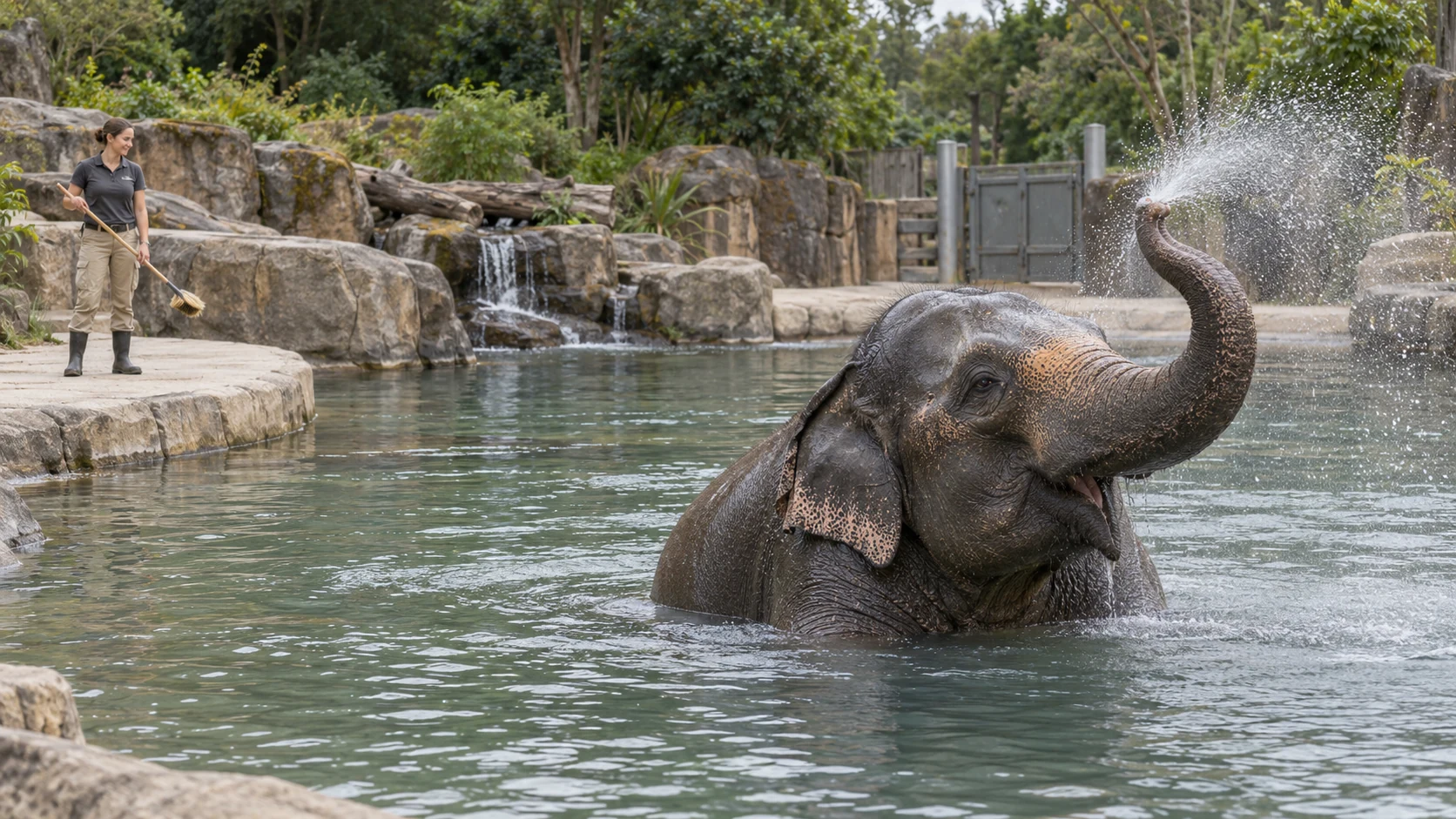
 Big Zoo

